
Commercial asbestos removal Wollongong is a serious business, with an estimated one in three homes built before 1987 containing asbestos.
Across the Illawarra region, older office buildings, warehouses, retail spaces, and industrial facilities pose an asbestos risk. There are strict guidelines for business owners and managers regarding asbestos; compliance is not optional, and getting it wrong carries serious legal and health consequences.
Find out about local risks and the types of asbestos you may encounter in Wollongong. We will guide you through NSW commercial compliance requirements and step through a Wollongong commercial asbestos removal process, so you will know exactly what to expect.
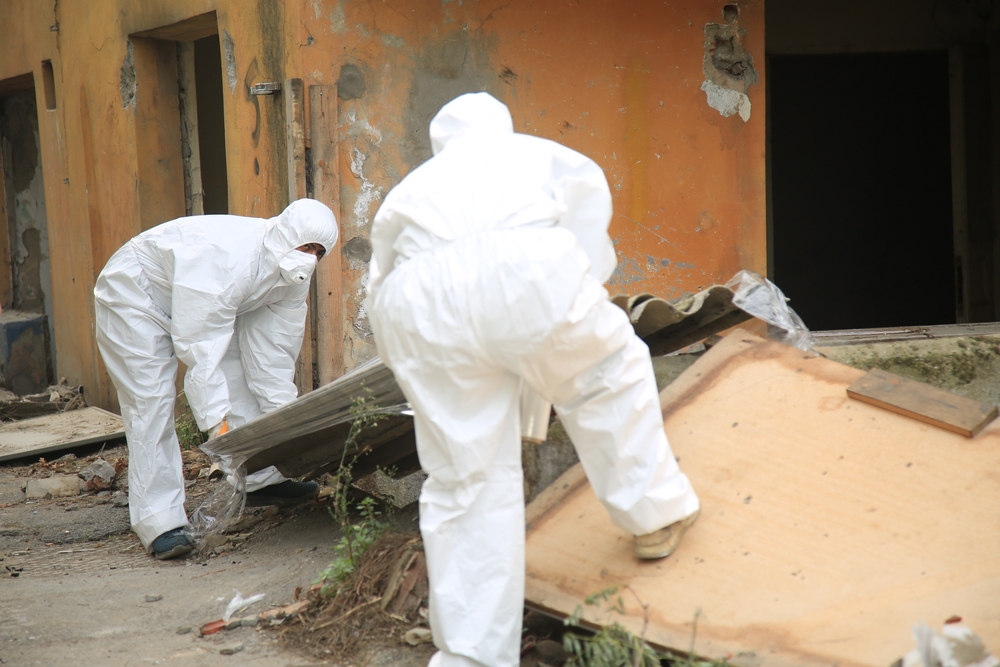
Why Commercial Buildings in Wollongong Are at Risk
In Australia, the use, manufacture, and import of asbestos were banned in 2003; however, any commercial building constructed or renovated before that date may contain asbestos-containing materials (ACMs)
The Wollongong and Illawarra region has a strong industrial and manufacturing history, so many local commercial, warehouse, and factory buildings predate the ban
Owners, managers and operators of commercial buildings have a duty of care under NSW Work Health and Safety (WHS) law, with penalties for non-compliance.
The type of buildings we cover includes:
- Office buildings and commercial fit-outs
- Warehouses and industrial facilities
- Retail and hospitality premises
- Schools, healthcare facilities, and aged care buildings
- Strata and multi-tenancy commercial properties
Types of Asbestos Found in Commercial Buildings
Not all asbestos is the same. The type present in a location affects the level of risk, the removal method and the personnel required.
Friable Asbestos
- Friable asbestos crumbles easily under hand pressure, releasing fibres readily into the air
- Considered the most hazardous category; requires a Class A SafeWork NSW licence for removal
- Common in older commercial buildings, friable asbestos can be found in places including:
- Spray-on fire-retardant coatings on structural steel
- Insulation for pipes and boilers
- Loose-fill insulation in ceiling cavities
Non-Friable (Bonded) Asbestos
- Non-friable asbestos is bound within material such as cement or vinyl. It can be left in place but may become friable and hazardous when cut, drilled, or broken
- Requires a Class B SafeWork NSW licence when the area to be removed exceeds 10 square metres
- Far more common in commercial buildings than friable asbestos, and is often found during refurbishments in locations including:
- Fibro wall cladding and sheeting
- Corrugated cement roofing
- Floor tiles and vinyl backing
- Textured paint and ceiling tiles
- Fencing and exterior cladding panels
The Six Mineral Types: A Quick Reference
- There are six asbestos mineral types which can only ever be positively identified by testing by a registered, accredited laboratory:
- Chrysotile (white asbestos): the most widely used; found in roofing, walls, and floors
- Amosite (brown asbestos): common in cement sheets and ceiling tiles
- Crocidolite (blue asbestos): considered the most dangerous; used in pipe insulation and spray coatings
- Anthophyllite, Tremolite and actinolite are likely but not common in construction and insulation materials
Commercial Compliance Requirements in NSW
Commercial asbestos removal in NSW is tightly regulated. Building owners, employers, and contractors have legal obligations under state and federal legislation.
The Legislation You Need to Know
- Work Health and Safety (WHS) Regulation 2017 (NSW) is the main framework for asbestos removal licensing and safe work practices
- You should have a copy of the SafeWork NSW Code of Practice: How to Safely Remove Asbestos
- Other regulations governing the acts of removing and disposing of asbestos will apply to your Wollongong asbestos removal contractor. These include:
- NSW Environmental Planning and Assessment Regulation 2021: applies when asbestos removal is part of complying or exempt development
- Protection of Environment Operations Act 1997: governs asbestos waste disposal
Licensing Requirements for Commercial Removal
- Only a class A licence holder may remove friable asbestos, regardless of quantity
- A class B licence is required for professionals handling non-friable asbestos where the total area exceeds 10 square metres
- Note that commercial asbestos removal almost always exceeds the 10 square metres threshold, permitting unlicensed work
- It’s advisable to verify your contractor’s licence number on the SafeWork NSW public register
- Unlicensed removal of asbestos in a commercial setting is a serious legal offence carrying significant penalties
Notification, Air Monitoring, and Clearance Certificates
- SafeWork NSW must be notified at least five business days before licensed asbestos removal begins
- Air monitoring is required during the licenced removal work, for the protection of workers and building occupants
- A clearance inspection will be conducted by a separate licenced asbestos assessor
- A clearance certificate will be issued to confirm that the area is safe for use again
- This is required before a commercial space can be reoccupied
The Asbestos Management Plan (AMP)
- Commercial building owners are legally required to maintain an Asbestos Management Plan if ACMs are identified on their premises
- The AMP identifies the location and condition of all known ACMs on the premises
- This document must be updated whenever asbestos-related work is carried out
- It is a mandatory document and part of the due diligence record if the property is sold or leased
The Commercial Asbestos Removal Process
This is where we walk you through the end-to-end process for Wollongong commercial asbestos removal so you know what is happening and why, throughout.
1: Site Inspection and Asbestos Survey
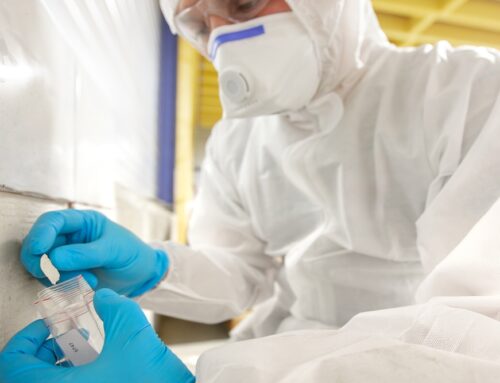
- Before any removal can commence, a qualified asbestos assessor must conduct a thorough inspection of the commercial premises
- Samples of suspected ACMs are collected and stored in sealed containers
- The samples are taken to a NATA-accredited laboratory for analysis
- The laboratory will issue a document detailing the location, type, and condition of all identified ACMs
2: Risk Assessment and Removal Planning
- The laboratory documentation, identifying friable vs. non-friable ACM, will dictate the scope of work, the licence class required, and the control measures to be implemented
- A detailed asbestos removal control plan is prepared
- SafeWork NSW must be notified of the plans five-days before work is scheduled to commence
- Expect your asbestos removal and disposal experts to select appropriate personal protective equipment (PPE) and decontamination procedures
3: Safe Removal and Enclosure
- The removal work itself must be conducted within a sealed exclusion zone around the work area
- Methods used include wetting of ACMs to suppress fibre release
- Negative air pressure enclosures and HEPA-filtered ventilation units help prevent fibre migration to unaffected areas
- Continuous air monitoring takes place during removal works to verify fibre levels remain within safe limits
4: Asbestos Waste Disposal
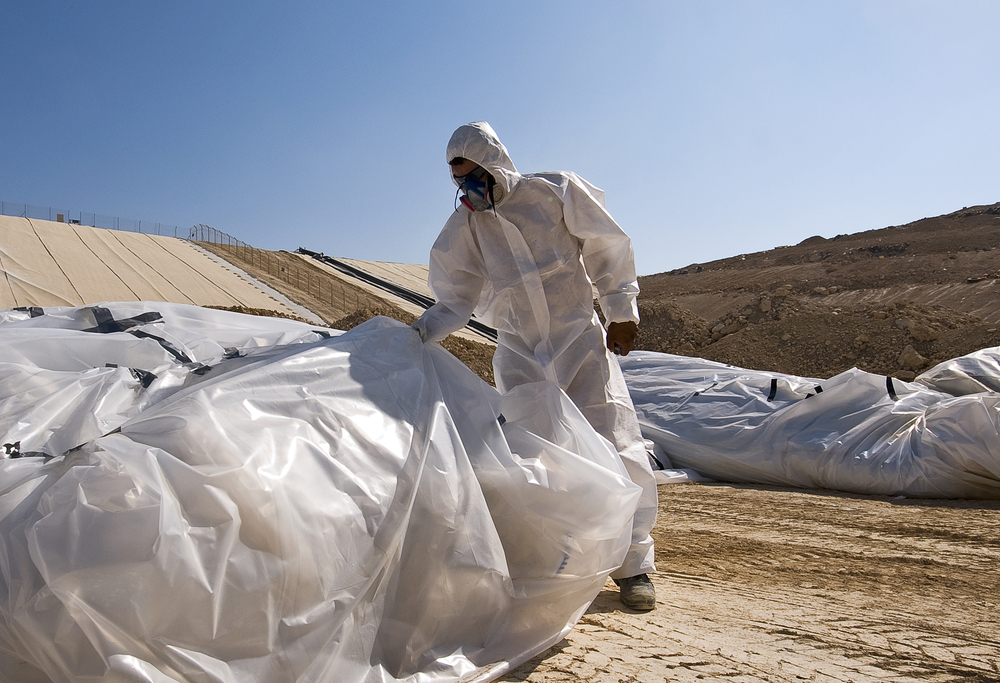
- Asbestos waste cannot be disposed of in standard waste streams; it is classified as hazardous waste under NSW legislation
- All waste must be double-bagged and labelled
- The sealed waste is transported by a licensed contractor in accordance with EPA requirements
- Disposal must be at a designated, licenced asbestos waste facility
- A waste disposal certificate is issued as part of the compliance record
5: Independent Clearance Inspection and Certificate
- Once removal is complete, an independent licenced asbestos assessor (separate from the removal contractor) conducts a clearance inspection
- Air sampling and visual inspection confirm the area is free from asbestos contamination
- The clearance certificate is the legal authority to reoccupy or recommence work in the affected area
- This certificate must be kept as part of the building’s compliance records
- The asbestos register and AMP for the building should be updated to reflect completed removal works
Wollongong Commercial Asbestos Removal Services
Now you understand that Wollongong commercial asbestos removal requires a fully licenced, experienced team with a thorough understanding of NSW compliance requirements.
Wollongong Asbestos Removal is the trusted local contractor for commercial asbestos removal Wollongong, covering Wollongong and surrounding suburbs across the Illawarra region. Our process includes Class A and Class B licensed asbestos removal professionals; we guarantee full compliance with SafeWork NSW regulations, and we are known for our safe, efficient service.
Contact us today for an initial chat and to arrange a site visit.





Leave A Comment