

Did you know that approximately a third of Australian homes built or renovated before 2000 likely have asbestos-containing materials (ACMs)?
Particularly in Wollongong and the surrounding suburbs, where many properties are older, householders need to understand the risks from ACMs and when to arrange Wollongong asbestos testing.
In this article, learn why Wollongong asbestos testing services matter, when they are required, and what the whole process involves to help keep you and your family healthy.
Why Asbestos Testing Matters
Inhalation of asbestos fibres causes horrific problems, often with breathing difficulties, and can sometimes be fatal.
You can’t always confirm a substance is asbestos by sight alone, so analysis at an accredited laboratory is the only way to be certain.
The Health Risks of Asbestos Exposure
- Asbestos fibres are dangerous when disturbed, releasing particles into the air that can be inhaled
- These fibres lodge in lung tissue, and cause diseases including asbestosis (chronic lung scarring), lung cancer, and mesothelioma
- Symptoms can take 15 to 50 years to appear, so early detection is crucial.
- It is common to underestimate the risk, especially if you are ‘feeling just fine’. If you have been exposed to airborne asbestos, seek medical advice.
- Diseases related to Asbestos are responsible for 4,000 deaths in Australia each year
Why Visual Identification Is Not Enough
- It is almost impossible to tell the difference between asbestos-containing materials (ACMs) and non-asbestos alternatives
- A popular material in construction before being banned in Australia, asbestos can be found in roof sheets, wall cladding, floor tiles, insulation for pipes, and cement
- Only a NATA-accredited laboratory using polarised light microscopy (PLM) can confirm the type and presence of asbestos fibres
Legal and Compliance Obligations in NSW
- It is actually illegal to start renovation or demolition on any property built before 2003 in NSW without a property asbestos register
- A manager or designated controller of commercial, retail, industrial, and mixed-use residential properties built before 1 January 2004 is mandated to maintain an asbestos register in NSW
- Failure to comply with these strict WHS rules can result in Safe Work NSW imposing fines and penalties
- If you are planning any type of construction or demolition work on a property in Wollongong, it is recommended that you arrange testing even when not legally compelled to do so
When Do You Need Asbestos Testing Wollongong?
Asbestos testing is not just for visibly damaged properties.
Especially if your property was built before 2003 in the Wollongong region, there are several situations where testing is either legally required or strongly advisable.
Before Renovations or Demolition
- DIY or professional renovation work that means disturbing, by cutting, drilling or sawing building materials, can release asbestos fibres into the air, with the risk of horrific health consequences
- NSW law requires testing prior to demolition or major refurbishment of pre-2003 buildings
- Both residential and commercial properties should be tested before work starts
- Even seemingly minor works like removing a wall, replacing flooring, or upgrading insulation can disturb ACMs
When Buying or Selling a Property
- You should expect older properties in Wollongong and surrounding suburbs built before 2003 to contain asbestos
- Buyers would be smart to arrange an independent asbestos inspection before settlement to avoid financial and legal risks
- Sellers with documentation confirming no dangerous asbestos in the premises have a negotiating advantage
- Homeowners or prospective buyers may contact a licenced asbestos professional to test material within the property before the sale takes place
After Storm or Accidental Damage
Note, this is often overlooked as a trigger for testing a property.
- Damaged asbestos-containing materials are more hazardous than undisturbed ones
- Storm damage, fire, or impact can crack or break ACMs, causing fibres to become airborne and hazardous to humans
- Arrange testing immediately, before any repair or clean-up work
- It may be dangerous to attempt to clean up or handle damaged material that may contain asbestos without professional testing
For Workplaces and Commercial Premises
- All businesses within buildings constructed before 2004 must have an asbestos register in place
- For all commercial or industrial premises, asbestos inspections should be conducted annually or if building works are planned
- Employers have a legal duty to ensure the workforce is protected from asbestos exposure under WHS legislation
- Business owners who fail to comply risk legal penalties
The Asbestos Testing Process
Professional asbestos testing should follow a structured process governed by Australian standards and safety regulations. This simple overview will help you understand what to expect.
Step One: Initial Site Assessment
- A Licensed Professional conducts a full visual inspection of the property
- Areas of concern are identified and documented
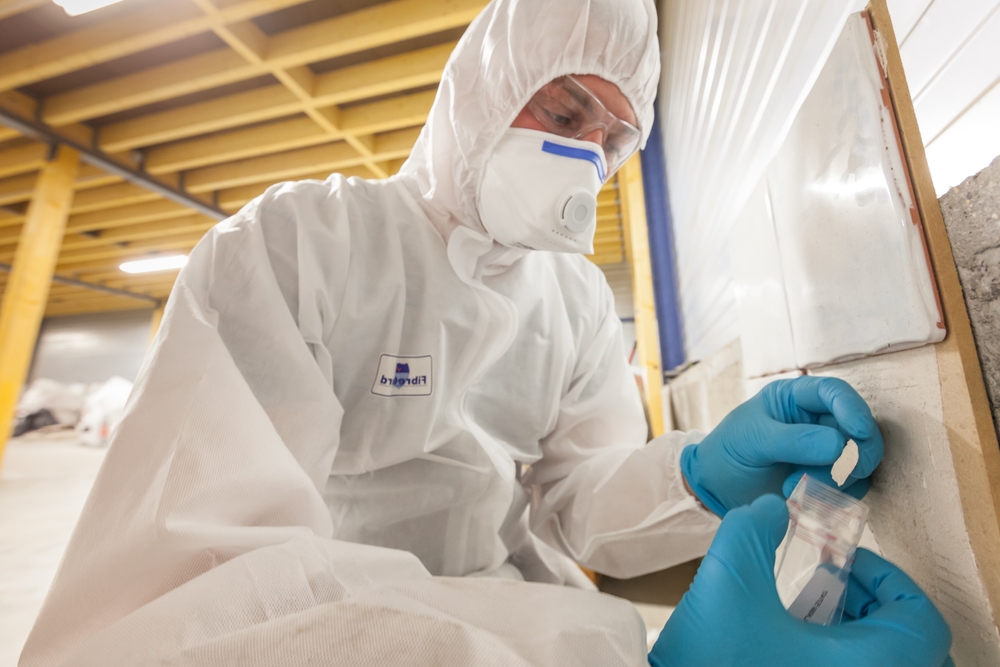
- The assessor will have personal protective equipment (PPE) and will normally use containment measures
Step Two: Sample Collection
- Samples are collected using techniques to minimise fibre release
- The suspected ACMs are sealed in labelled containers
- It is strongly advised that homeowners do not attempt to collect samples themselves, as disturbing suspected ACMs can be dangerous to the health of the collector and anybody nearby
Step Three: NATA-Accredited Laboratory Analysis
- The samples are transported to a National Association of Testing Authorities (NATA) laboratory
- Samples are examined to confirm the presence and type of asbestos fibres
Results are typically returned within 24 to 48 hours - Reports from the laboratory will note either “No Asbestos Detected” (NAD) or identify the specific fibre type present
Step Four: Asbestos Report and Recommended Action
- Once results are confirmed, a written report will be produced confirming findings and legal compliance notes
- The report will typically recommend either removal or ongoing management
- If a property requires an asbestos register, the report forms the basis of that document
- Retain the report as part of the property’s records
Arrange Your Professional Assessment
You will now realise why professional Wollongong Asbestos Testing is the only reliable way to confirm whether a property is safe.
At Wollongong Asbestos Removal, we are the trusted local experts. Visit our asbestos testing web page for a full overview of our Wollongong asbestos testing services.
Contact our friendly experts today with any questions and to arrange safe asbestos testing for your property.



Leave A Comment