
Finding asbestos in industrial buildings NSW and removing it safely is the resolution every business owner needs. Unmanaged asbestos poses serious health risks and carries heavy NSW compliance penalties.
In this article, we identify those industrial buildings most likely to contain asbestos, and explain your legal obligations under NSW law. Read on to understand industrial asbestos removal Wollongong, know how to protect your workers, stay compliant, and keep operations running smoothly.
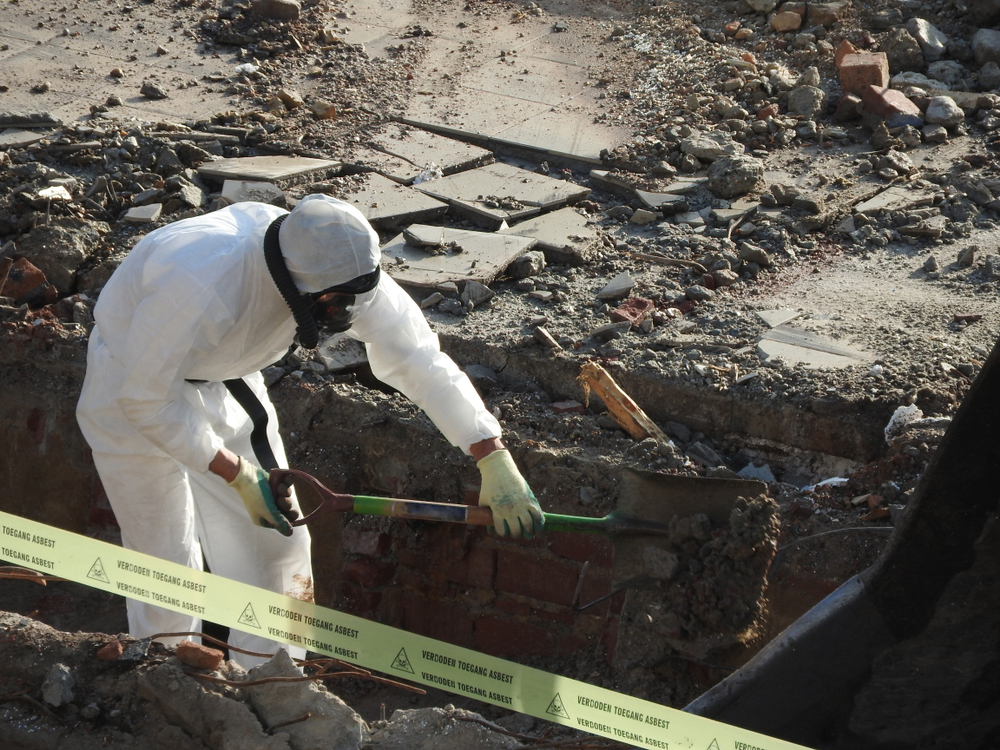
What buildings in Wollongong are most likely to contain asbestos?
Industrial buildings constructed before 1990 are highly likely to contain asbestos-containing materials (ACMs). Asbestos was a popular material in Australian construction until the 1980s due to its durability, heat resistance, and fireproof qualities.
Which industrial buildings built before 1990 most commonly contain asbestos?
Many older Australian buildings still contain asbestos-containing materials, with industrial properties at particular risk due to the extensive use of asbestos in insulation and fireproofing.
The following industrial structures have the highest probability of containing asbestos:
- Factories and manufacturing plants built before 1985
- Storage facilities or warehouses constructed before 1990
- Power stations and industrial boiler rooms from the 1960s-1970s
- Mining and processing facilities in the Illawarra region
- Aviation and automotive workshops predating 1990
- Older refineries and Chemical plants
Where is asbestos typically found inside industrial facilities?
Asbestos is often found in these areas:
- Wall and roof insulation
- Pipe insulation and lagging
- Thermal blankets around heating systems
- Structural beams and columns
- Fire doors and fire-rated panels
- Asbestos cement wall panels
- Roofing materials and corrugated panels
- Floor tiles
- Carpet underlay
- Ceiling tiles and decorative plaster
- Roofing shingles and felt
- Window sealing compounds and joint glazes
What are the legal compliance requirements for industrial properties in NSW?
NSW law imposes strict obligations on persons conducting a business or undertaking (PCBUs), including building owners, managers, and contractors managing workplaces with asbestos.
Do industrial properties need an asbestos register under NSW law?
Yes. Under NSW Work Health and Safety Regulation 2017 Clause 425-427, commercial properties built before 2003 must have an asbestos register if asbestos is present or assumed.
The register must include:
- Location of all asbestos or ACMs
- Type and condition of materials
- Work activities likely to disturb asbestos
- Accessibility to all workers, contractors, and health representatives
Which licensed removalist class is needed for industrial asbestos?
Licensing requirements under Clause 458:
| Asbestos Type | Area Threshold | Required Licence |
|---|---|---|
| Friable asbestos | Any amount | Class A licensed removalist |
| Non-friable asbestos | Greater than 10 m² | Class B licensee |
| Non-friable asbestos | Less than 10 m² | Unlicensed permitted |
Unlicensed removal above thresholds is illegal and creates significant health and legal risks.
Which buildings should prioritise asbestos inspection immediately?
Immediate inspection is critical for structures facing demolition, renovation, or high-occupancy use.
Do factories and warehouses built before 1980 need urgent testing?
Yes. Buildings pre-dating 1980 have a very high likelihood of containing asbestos:
- Homes built or renovated prior to 1987 are highly likely to contain asbestos products
- Buildings between 1987-1990 are likely to contain some asbestos
- Post-1990 construction is unlikely to contain asbestos
Factories and warehouses from this era used asbestos extensively in insulation, roofing, and fireproofing.
Should demolition companies assess asbestos before starting work?
Absolutely. Demolition without asbestos assessment is illegal and dangerous:
- Demolition waste must be safely removed and disposed of prior to work commencing
- Disturbing asbestos during demolition releases harmful fibres into the air
- Strict NSW laws require proper inspection to avoid legal penalties
- Licensed assessors must identify asbestos before demolition contracts begin
FAQs about industrial asbestos in Wollongong buildings
What age of industrial buildings most often have asbestos-containing materials (ACMs)?
Buildings constructed before 1990, especially those from the 1950s-1980s, are most likely to contain asbestos.
Can I remove industrial asbestos myself in NSW?
No. Friable asbestos requires Class A licensing, and non-friable asbestos over 10 m² requires Class B licensing. Unlicensed removal is illegal.
How long does an industrial asbestos removal task take?
The project timescale depends on the size of the property and type of asbestos. Large factories may require weeks, while smaller warehouses might complete in days. Licensed removalists provide exact estimates after inspection.
Do I need air monitoring after industrial asbestos removal?
Yes, air monitoring will determine whether an airborne fibre risk exists, especially in occupied areas.
Ready to remove asbestos safely from your industrial property?
We’re Wollongong Asbestos Removal, a locally owned and operated NSW business with years of experience in industrial asbestos removal Wollongong.
Contact us today to arrange safe, industrial asbestos removal and disposal services. Whether you’re demolishing, renovating, or selling up, our approachable team is ready to help you stay safe.



Leave A Comment